![[Original size] Atharvaa.png](https://static.wixstatic.com/media/766209_799bfbb2096e42dfa010a94b19c0eb56~mv2.png/v1/crop/x_43,y_254,w_617,h_235/fill/w_289,h_111,al_c,q_85,usm_0.66_1.00_0.01,enc_avif,quality_auto/%5BOriginal%20size%5D%20Atharvaa.png)


Nipah Virus: the recent deadly outbreak in Kerela...
- Dr. Aditi Kumar

- 17 सित॰ 2023
- 3 मिनट पठन
Nipah virus status in India: Recently Nipah virus outbreak is detected in Kerala. This is the fourth time the viral infection has been confirmed in Kerala. It was detected in Kozhikode in 2018 and 2021 and in Ernakulam in 2019.
The current Nipah strain is the Bangladesh variant that spreads from humans is characterised by high mortality despite lower infectivity. The virus, for which there is no vaccine, spreads through contact with the bodily fluids (saliva or excrement) of infected Pteropus fruit bats or direct contact with intermediate host such as pigs, or humans and has a mortality rate of up to 75% among those infected.
What is the Nipah virus?
Nipah virus (NiV) is a zoonotic RNA virus, member of Paramyxoviridae family is transmitted from animals to humans and can also be transmitted through contaminated food or directly between people. The virus can also cause severe disease in animals such as pigs.

What are signs and symptoms of Nipah Virus infection?
Human infections range from asymptomatic infection to acute respiratory infection (mild, severe), and fatal encephalitis.
Infected people initially develop symptoms including-
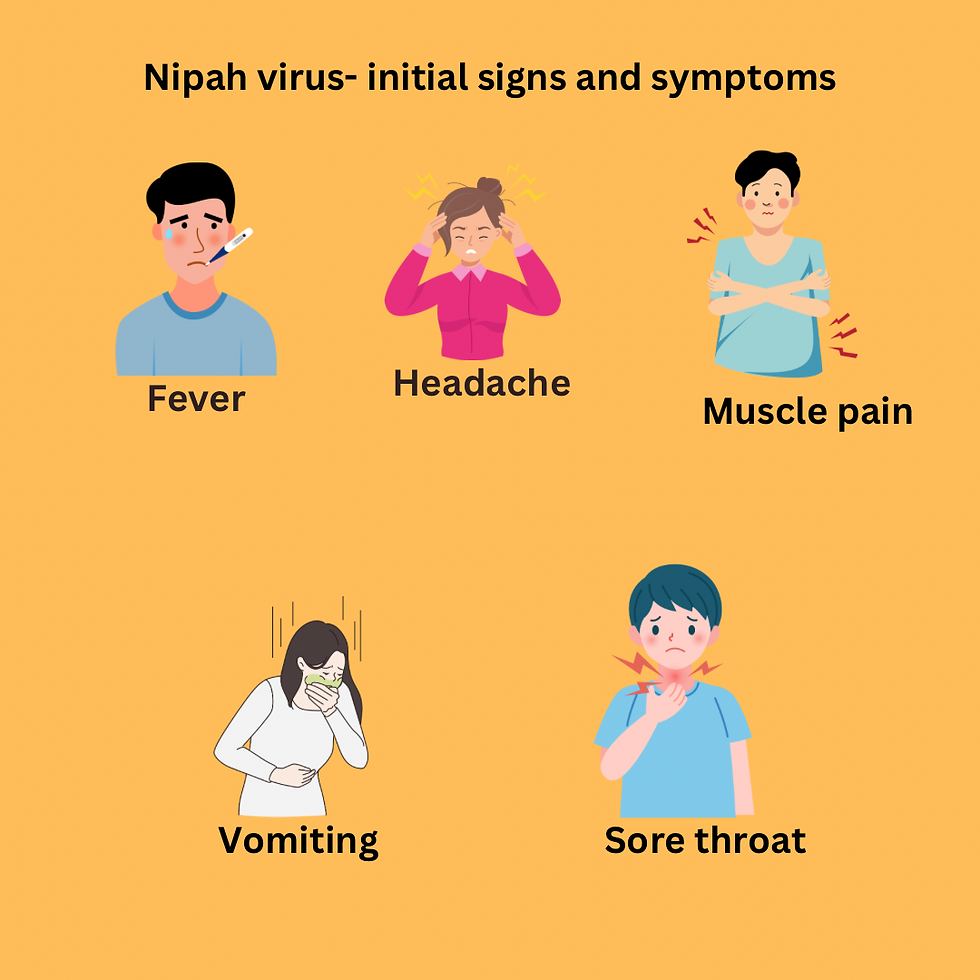
Fever
Headaches
Myalgia (muscle pain)
Vomiting
Sore throat
This can be followed by dizziness, drowsiness, altered consciousness, and neurological signs that indicate acute encephalitis.
Some people can also experience atypical pneumonia and severe respiratory problems, including acute respiratory distress.
Encephalitis and seizures occur in severe cases, progressing to coma within 24 to 48 hours.
What is the incubation period for Nipah virus infection?
The incubation period (interval from infection to the onset of symptoms) is believed to range
from 4 to 14 days. However, an incubation period as long as 45 days has been reported.
How is Nipah virus infection diagnosed?
Initial signs and symptoms of Nipah virus infection are nonspecific, and the diagnosis is often not suspected at the time of presentation.
Nipah virus infection can be diagnosed with clinical history during the acute and

convalescent phase of the disease.
The main tests used are real time polymerase chain reaction (RT-PCR) from bodily fluids and antibody detection via enzyme-linked immunosorbent assay (ELISA).
Other tests used include many other types of polymerase chain reaction (PCR) assay, and virus isolation by cell culture.
Specimen collection should be performed in the early stages of disease which includes throat and nasal swab, cerebrospinal fluid , urine and blood.
What is its treatment?
There are currently no drugs or vaccines specific for Nipah virus infection although WHO has identified Nipah as a priority disease for the WHO Research and Development Blueprint.
Intensive supportive care is recommended to treat severe respiratory and neurologic complications.
What are its complications?
Most people who survive acute encephalitis make a full recovery, but long-term neurologic conditions have been reported in survivors.
Approximately 20% of patients are left with residual neurological consequences such as seizure disorder and personality changes.
A small number of people who recover subsequently relapse or develop delayed onset encephalitis.

The case fatality rate is estimated at 40% to 75%. This rate can vary by outbreak depending on local capabilities for epidemiological surveillance and clinical management.
Prevention and Containment strategy for Nipah virus outbreak-
For prevention of spread of Nipah virus infection following measures should be taken by people-
Practice handwashing regularly with soap and water
Avoid contact with sick bats or pigs
Avoid areas where bats are known to roost
Avoid eating or drinking products that could be contaminated by bats, such as raw date palm sap, raw fruit, or fruit that is found on the ground
Avoid contact with the blood or body fluids of any person known to be infected with NiV.
When an outbreak is suspected, the animal premises should be quarantined immediately. Culling of infected animals with close supervision of burial or incineration of carcasses may be necessary to reduce the risk of transmission to people. Restricting or banning the movement of animals from infected farms to other areas can reduce the spread of the disease.
As Nipah virus outbreaks have involved pigs and/or fruit bats, establishing an animal health/wildlife surveillance system, using a One Health approach, to detect Nipah cases is essential in providing early warning for veterinary and human public health authorities.
In the absence of a vaccine, the only way to reduce or prevent infection in people is by raising awareness of the risk factors and educating people about the measures they can take to reduce exposure to the Nipah virus.
Blog by Dr. Aditi Kumar

Excellent information.